
Stop Reacting, Start Planning:
Why the LA Fire AAR Demands an Infrastructure-First Approach
I’ve spent a lot of time standing on job sites, staring at dirt. I admit, I probably get more excited about soil composition than most people. But when you look closely at the ground beneath your boots, you realize pretty quickly that the "we’ve always done it this way" mentality isn’t just lazy—it’s dangerous.
I recently sat down with a cup of coffee and read through the After-Action Review (AAR) for the catastrophic Eaton and Palisades Fires from January 2025. It’s a heavy read—over 100 pages detailing a disaster that claimed 31 lives and destroyed over 16,000 structures. It breaks down timelines, wind speeds, and evacuation protocols.
But if you strip away the bureaucratic formatting, the report screams one uncomfortable truth that city planners and government officials need to hear: We are building our emergency response strategies on hope, not engineering.
We hope the wind dies down so the planes can fly.
We hope the power stays on so the alerts go out.
We hope the dirt fire road holds up under a 40-ton truck.
Well, in January 2025, hope didn’t show up for work. The winds hit 100 mph. The planes were grounded. The power failed. And when the dust settled—literally and figuratively—we were left looking at a bill for nearly $9 billion in economic damage.
We cannot control the weather. But we can control the ground we drive on. Continuing to rely on untreated, permeable dirt roads for critical access isn't a budget decision anymore; it’s a tactical liability. It’s time we stop reacting to the last disaster and start planning for the next one.
The "Air Support" Reality Check
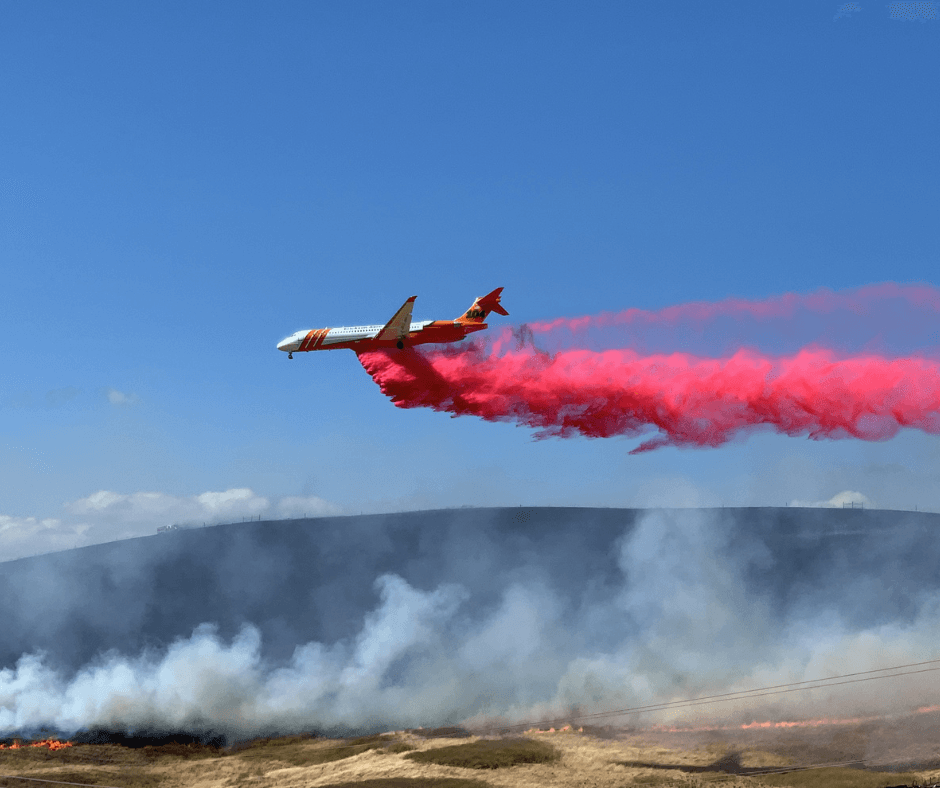
Let’s be honest: we love the air show. There is something reassuring about seeing a massive tanker drop a curtain of red retardant on a ridge line. It makes for great news footage, and it gives us a sense of security that "help is coming from above."
But the LA Fire AAR shattered that illusion pretty quickly.
The report notes that on January 7, shortly after the Eaton Fire started, the wind was ripping through the canyons so hard that aerial support became impossible. Command grounded all aircraft—helicopters included—at 6:45 p.m., barely 30 minutes after they mobilized.
Think about that for a second. At the exact moment the fire started running downhill toward neighborhoods, the most expensive tool in the toolbox became an expensive lawn ornament.
When the sky closes, the battlefield changes instantly. The mission’s success falls 100% on the ground crews—the engines, the dozers, and the brave men and women driving them. And what are they driving on? In many cases, it’s a rural access road built the same way we built them in 1920: by pushing some dirt around and driving over it a few times.
If that road is built on native dirt or loose gravel, it is designed to fail. It’s not a matter of if, but when. If we learned anything from this report, it’s that we need an "Infrastructure-First" approach. We have to treat these unpaved roads not as temporary trails, but as permanent life-safety systems.
The "Permeability" Trap
(Or: Why Dirt Drinks Water)
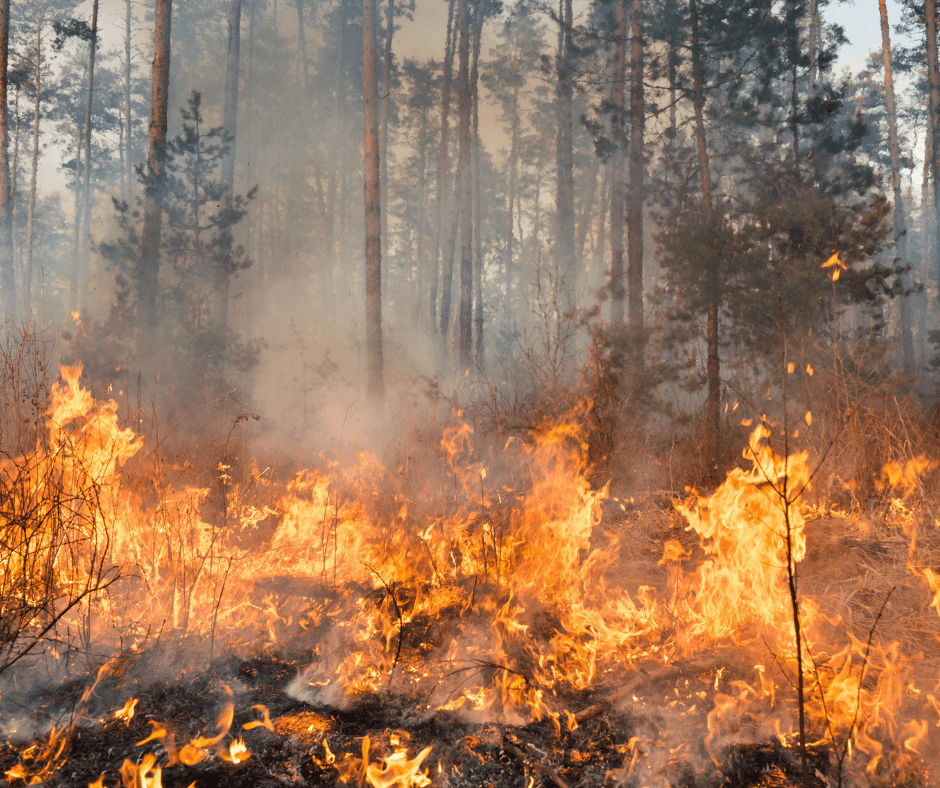
Here is where I get a little cerebral, so bear with me. The vulnerability of our current infrastructure comes down to a single physical property: permeability.
Traditional unpaved roads are porous. They are sponges. They are designed to absorb water. When the soil is dry, friction holds the particles together. But when it rains—and history tells us it eventually always rains—that water acts as a lubricant. The friction disappears. The load-bearing capacity drops to zero.
The AAR explicitly mentions that "rugged terrain" and road conditions "hindered firefighter access". In the polite language of government reports, "hindered access" is code for "we couldn't get there."
Now, picture a Type 3 water tender fully loaded. It weighs about 40,000 pounds. You put that truck on a saturated, permeable dirt road, and it doesn't drive over the road; it drives through it. It sinks to the axles.
The Stabilized Solution!
This is where Green Roads Project comes in. We aren't reinventing the wheel here; we’re just making sure the wheel has something solid to roll on.
Soil stabilization technology eliminates the permeability trap. We introduce an advanced co-polymer binder into the native soil. It bonds the particles together on a molecular level. It transforms a porous liability into a solid, impermeable slab.
Tactical Reliability: A stabilized road doesn't turn to mud. It doesn't rut. It ensures that when the air support is grounded, the ground support can actually move.
Evacuation Certainty: It guarantees the road is there when you need it, regardless of the weather.
It’s logical. It’s tactical. And frankly, it’s about time we started doing it.
The Digital Failure
(The "Last Mile" is a Dirt Road)

We live in a digital world, and we rely heavily on tech to keep us safe. But the AAR pointed out a cascading failure of our digital safety nets.
Power outages were widespread—some planned Public Safety Power Shutoffs (PSPS), some caused by the fire itself. Cell towers went down or got choked out by heavy smoke. The report states clearly that many residents "did not receive any official evacuation messaging".
When the power grid fails and the cell towers go dark, we are back to the Stone Age of communication. The response reverts to physical presence. The AAR confirms that LASD deputies and firefighters had to drive into neighborhoods, using PA systems and knocking on doors to get people out.
In that moment, the access road stops being just a piece of infrastructure. It becomes the only communication network we have left. It is the "last mile" in the most literal sense.
The report mentions residents encountering "blocked roads" and debris. If the road surface itself is unstable—prone to washboarding or failing under the surge of panic traffic—that final lifeline is severed.
Soil stabilization provides a critical redundancy. By creating a unified, durable surface, we ensure that even when the digital grid goes down, the physical grid stays up.
The Asphalt Fallacy
(Or: Don't Pave the Planet)
I know what some of you are thinking. "Okay, the dirt roads are bad. Let's just pave them all."
I hate to be the one to tell you this, but that is a fiscal fantasy.
The economic damage from these fires is estimated at nearly $9 billion. Property damage estimates are as high as $53.8 billion. We cannot absorb those losses and find the trillions of dollars it would take to pave every fire road and rural lane in the Wildland-Urban Interface (WUI) with hot-mix asphalt.
Plus, asphalt is often the wrong material for these environments. Asphalt is brittle. It’s rigid. In the freeze-thaw cycles of the mountains or the shifting soils of fire zones, asphalt cracks. Once it cracks, water gets in, the sub-base fails, and your expensive road crumbles.
The "Cap-Less" Advantage This is where we need to challenge the bureaucracy. There is a "Cap Material" cycle that municipalities get stuck in. They think the only way to upgrade a road is to put a cap on it—asphalt or concrete.
Soil stabilization defies that logic. It allows us to build high-performance, all-weather roads without the asphalt cap. We use the native soil—the dirt right there on the site—as the primary building material.
Reduced CapEx: We eliminate the cost of quarrying, trucking, and laying asphalt. We aren't buying a road; we are engineering the ground to become the road.
Eliminated OpEx: The reactive cycle of grading and re-graveling is a black hole for municipal budgets. A stabilized road creates a maintenance-free surface that lasts for years.
Those savings can be redirected toward the other critical gaps the AAR identified—like community education, vegetation management, and actually staffing the emergency management offices properly.
A New Mandate for Leadership
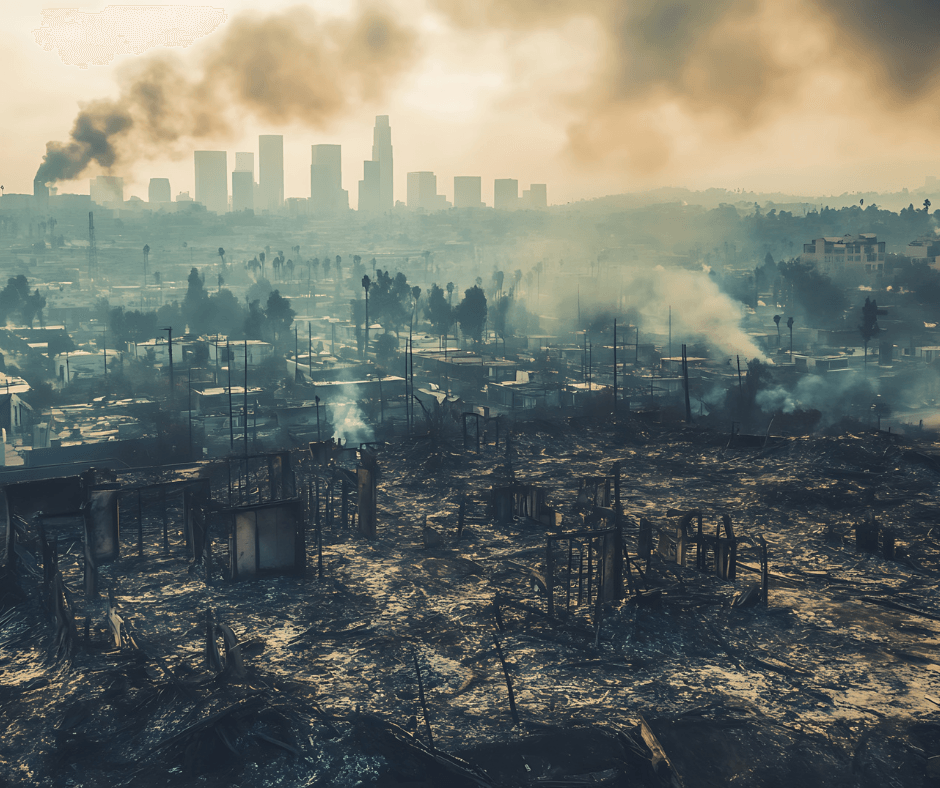
The findings of the 2025 LA Fires AAR are a mandate for change. But change in this industry is painfully slow. Everyone is so worried about liability that they forget to innovate. They stick to the "we've always done it this way" playbook because it feels safe.
Well, look at the report. "Safe" didn't work.
We need to stop looking at infrastructure planning and emergency response as separate silos. They are the same thing.
To the City Planners: Stop approving developments with "fair weather" evacuation routes. If the road can't handle a flood, it shouldn't handle a permit.
To the Fire Chiefs: Advocate for roads that support your heavy iron in all conditions. You know better than anyone that you can't count on the air support.
To the Community Leaders: Demand that your "rural character" roads are stabilized. You don't have to pave paradise to make it safe.
The technology to build safer, stronger, and more resilient access exists. It doesn't require trillions of dollars. It just requires the political will to look beyond the dirt and build an infrastructure that holds the line when everything else fails.
If it were easy, everyone would do it. But we aren't looking for easy. We're looking for what works. Let's get to work.