Beyond Dirt: How Stabilized, All-Weather Access Roads Can Save Lives
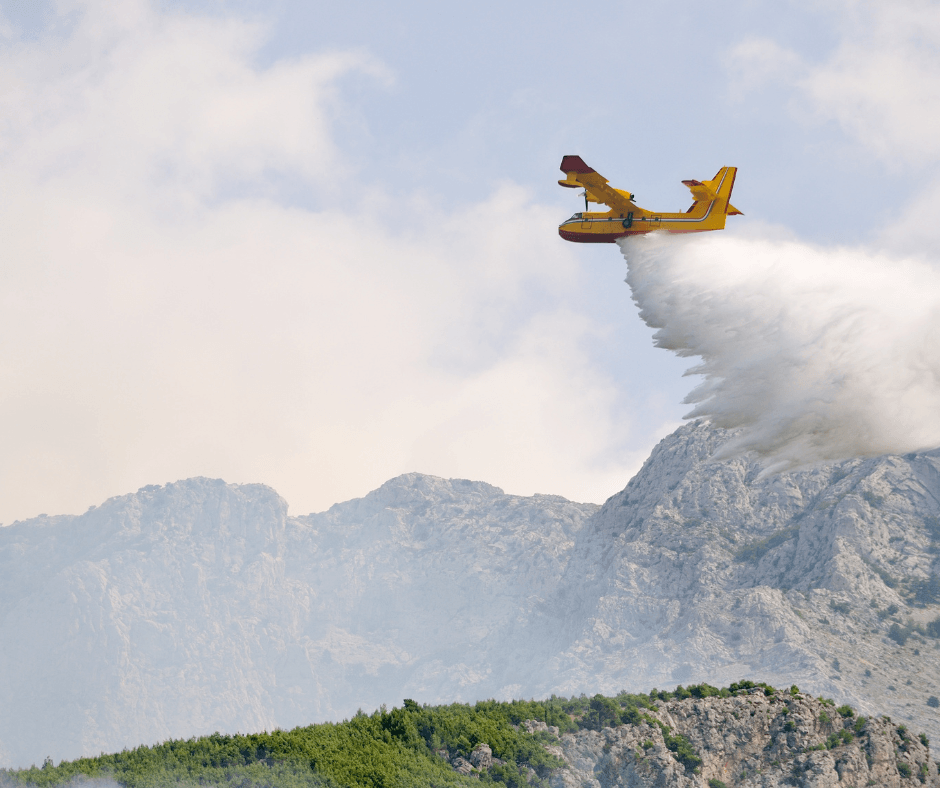
At 6:45 p.m. on January 7, 2025, the order came: all aerial firefighting aircraft over the Eaton Fire were to be grounded. Hurricane-force winds, the same winds that were creating "flames up to 200 feet long" and "sending embers flying up to two miles away", made it too dangerous to fly.
In that single moment, the county's primary strategy for fighting a wildfire in the steep, rugged terrain of the San Gabriel Mountains was nullified. The fire fight was now exclusively a ground war.
The official After-Action Review (AAR) of the 2025 Los Angeles Fires, commissioned by the Board of Supervisors, details what happened next. It describes a desperate battle in "steep and rugged terrain" that "hindered firefighter access and contributed to the rapid spread of the fire". Crews were forced to "hike into remote areas", ceding critical time, property, and, ultimately, lives to the conflagration.
The report identifies this as a critical challenge. But to call it just a "challenge" is to miss the point. The grounding of air support was not the failure; it was the revelation of a systemic, infrastructural vulnerability. The AAR's findings expose a dangerous over-dependency on aerial assets and a stark failure in pre-incident planning: a lack of stable, reliable, all-weather fire access roads.
In an era of wind-driven "community conflagrations", we can no longer rely on strategies that are negated by the very wind that fuels the disaster. An investigation into modern engineering solutions reveals a practical, cost-effective, and life-saving alternative that moves our infrastructure "beyond dirt."
The Anatomy of an Access Failure
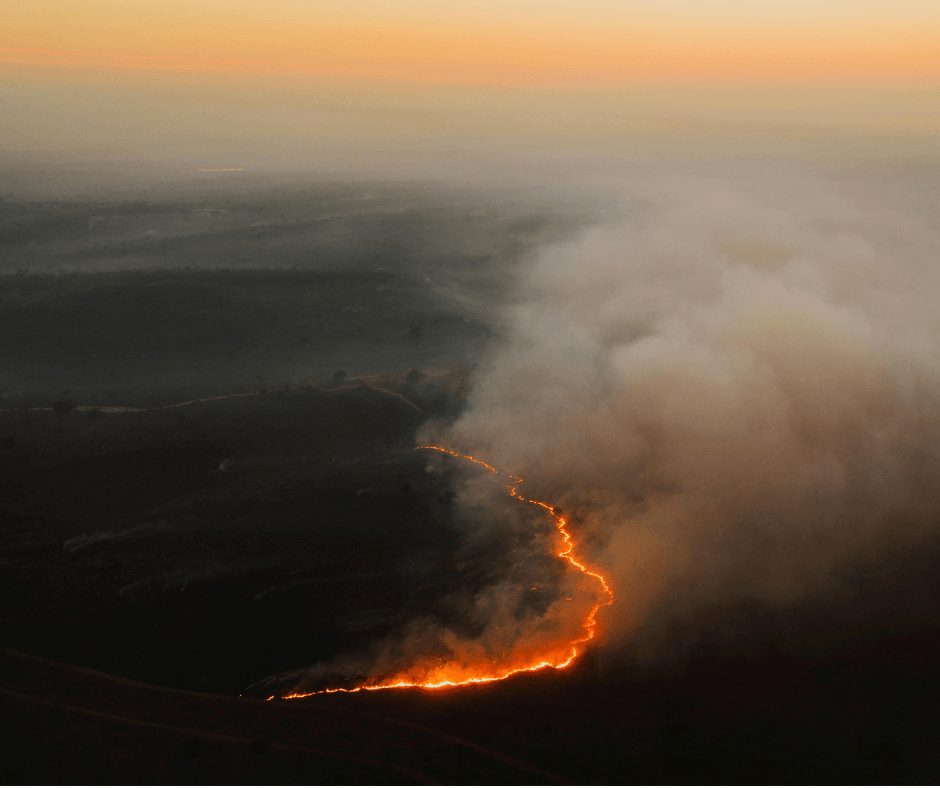
To understand the solution, one must first dissect the problem. The AAR provides the blueprint. The fires in both the Santa Monica and San Gabriel Mountains were defined by their "rugged terrain, characterized by steep slopes and deep canyons".
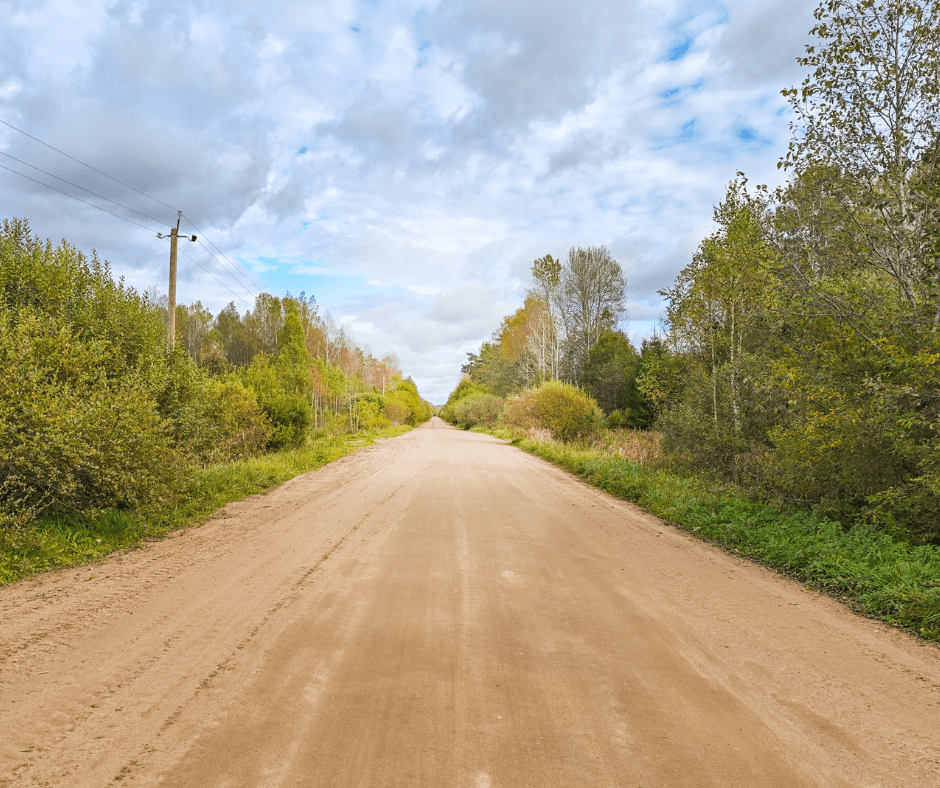
This is the battleground. The tools to fight on this ground are fire engines, bulldozers, and water tenders. But the pathways we provide them are, all too often, little more than graded dirt tracks.
This "traditional" approach to access roads is a critical point of failure.
This creates a safer, more responsible site, mitigating long-term risk and ensuring compliance with environmental regulations from day one.
They Are Weather-Dependent:
A dirt road is a fair-weather friend. In a dry, windy event, it generates blinding, "fugitive" dust, choking air filters and crippling visibility. In a wet season—which should be a time of relief—these same roads turn to impassable mud, collapsing under the 40,000-pound weight of a Type 1 fire engine.
They Are High-Maintenance:
Their lifecycle cost is staggering. They require constant, expensive re-grading to combat "washboarding" and rutting. They are susceptible to erosion, with every rain event washing away the surface and undercutting the base, requiring new aggregate to be hauled in at great public expense.
They Are Unreliable:
For a Fire Chief mapping out a pre-plan, a dirt road is a "maybe." Maybe it will be passable. Maybe it hasn't washed out. Maybe it can hold an engine. This uncertainty is a direct threat to public safety. When the Eaton Fire "aggressively spread to the west" after midnight on January 8, Incident Command needed to "evaluate more areas for evacuations". That evaluation is entirely dependent on one question: "Can we get our people in there?"
The AAR shows that in the moments that mattered most, our infrastructure forced hand crews to hike in. This is an unacceptable 19th-century solution to a 21st-century problem.
The Engineering Solution: A New Foundation for Resilience
The alternative is not, as some might assume, paving thousands of miles of remote mountainside with asphalt. The cost would be prohibitive, the environmental impact severe, and the solution itself flawed—asphalt is rigid, cracks on unstable ground, and becomes a toxic runoff source when burned.
The solution is soil stabilization. It is a third way: an engineered approach that uses the ground itself to create a superior road.
Technologies delivered by firms like Green Roads Project provide a clear example. The process involves applying a bio-resin-based liquid binder that is mixed directly with the in-situ (native) soil or with locally sourced, recycled aggregate. This eco-friendly liquid polymer acts as a powerful cementing agent, binding the individual soil particles and aggregates.
The result is a "hardened, durable surface" that is "water-resistant" and "long-lasting". This is not "dirt." It is an engineered, all-weather composite material.
Creating True All-Weather Stability
For fire leaders and emergency managers, this technology solves the weather dependency problem.
By binding the soil, the bio-resin binders create a surface that is "water-resistant" and "resilient to erosion". Rainwater sheets off the hardened surface rather than penetrating it, eliminating the mud, rutting, and washouts that plague traditional dirt roads. This ensures that even during a "Pineapple Express" storm, the roads remain passable, ready for the next fire season or, critically, for post-fire debris flow response.
In dry conditions, the solution is equally transformative. The stabilized surface "mitigates fugitive dust", a finding echoed by testing from various state and federal agencies. This is not a minor point. It means better visibility for evacuating residents and responding units. It means fire engine air and water-pump filters are not choked with abrasive dust, reducing mechanical failure at critical moments.
Ensuring Long-Term, "Set it and Forget it" Accessibility
For a city planner, infrastructure is a long-term liability. Every asset carries a maintenance budget. A key finding of our investigation is that the primary cost of traditional access roads is not their creation, but their perpetual upkeep.
Soil stabilization technology fundamentally alters this cost equation. By creating a durable, hardened surface, it "reduces long-term maintenance costs". The road surface no longer needs to be re-graded multiple times a year. Its water-resistant nature prevents the erosion that is the primary driver of these maintenance cycles.
This shifts a fire access road from an operational liability (a high-maintenance "maybe") to a permanent asset (a low-maintenance "guarantee"). When a fire chief in LA County conducts pre-incident planning, they can mark a stabilized road on their map and know with certainty that it will be able to bear the load of their heaviest apparatus, 365 days a year, for years to come. This "long-lasting" accessibility is the bedrock of a reliable emergency response plan.
Busting the Budget Myth: Why Planners and Officials Must Re-evaluate "Cost"
The most common objection to any new infrastructure is cost. This is where the investigative lens is most critical, as we must differentiate between price and cost.
The price of a traditional asphalt road in a remote area is astronomical. It involves massive industrial logistics, heavy paving equipment, and tons of expensive, petroleum-based "cap" material.
The price of a dirt road is low, but its lifecycle cost is incredibly high. It is a subscription-based model of public works funding, siphoning money year after year for regrading, aggregate hauling, and washout repairs.
Soil stabilization breaks this false dichotomy.
Our investigation finds that the primary financial benefit is the "minimization or elimination of costly cap materials like asphalt". The technology is designed to work with what is already there.
By "utilizing in-situ (native) soil or recycled aggregate", this process slashes the two biggest line items in any road project: the cost of materials and the cost of hauling them. Trucks are not hauling tons of asphalt up a mountainside; they are hauling a far smaller volume of liquid concentrate, which is then mixed with the existing soil.
This dramatically lowers the initial project price. When combined with the "significant reduction in long-term maintenance costs", the total cost of ownership for a stabilized road is demonstrably lower than its traditional counterparts.
For state and local officials, this presents a new, compelling value proposition. This is not about finding new money; it's about reallocating existing, bloated maintenance budgets toward a one-time capital investment that pays for itself.
.
Furthermore, these solutions come with powerful co-benefits that satisfy other public mandates. They are often non-toxic and environmentally friendly, preventing chemical leeching. By "lowering the carbon footprint" compared to asphalt production and reducing fugitive dust, they help planners meet critical air quality and climate goals.
A Strategic Asset: What Stabilized Roads Mean for Leaders
Viewing these roads as simple pathways is a failure of imagination. In a modern fire-resilience strategy, they are multi-functional, life-saving assets.
For Fire Department Leaders:
A network of all-weather roads is a strategic game-changer.
Faster Attack: It enables a faster, safer "time to attack," allowing ground crews to engage the fire front directly and halt its progress before it becomes a conflagration.
Reliable Safety Zones: A 20-foot-wide, non-combustible stabilized road is a pre-built "Temporary Refuge Area" (TRA). It provides a reliable safety zone for firefighters and equipment if a fire overruns their position—a life-saving feature in volatile wind conditions.
Permanent Firebreaks: The road itself is a fuel-free barrier. It acts as a permanent, non-combustible firebreak that stops a ground fire and provides a solid, defensible line from which to conduct back-burning operations.
For City Planners and Government Officials:
This is the definition of resilient, "multi-benefit" infrastructure.
Mitigating Post-Fire Hazards: The AAR notes the "severe environmental damage", but the danger continues long after the smoke clears. The first rain on a burn scar often triggers catastrophic mudslides. A network of erosion-resistant, stabilized roads and slopes can serve as a primary defense, diverting water and holding hillsides together.
Fiscal Responsibility: This is an opportunity to end the costly cycle of "grade and repeat." It is a prudent, one-time investment in a permanent asset that saves taxpayer money for decades.
For Community Leaders:
The AAR identified "chaotic" evacuations and "public compliance challenges". This is, in part, a crisis of confidence.
Trusted Evacuation Routes: Residents are reluctant to flee into a narrow, smoke-filled dirt road. A network of hardened, well-maintained, all-weather roads provides clear, reliable, and safe egress. It builds public trust and, in turn, public compliance.
Conclusion: We Must Build for the Battle We Are In
The 2025 After-Action Report is a stark inventory of a "perfect storm". It details heroic actions in the face of an overwhelming catastrophe. But as this investigation finds, it is also an X-ray of our own infrastructural skeleton, revealing the weak points that fractured under pressure.
The report shows, in no uncertain terms, that our over-reliance on aerial firefighting is a gamble we will repeatedly lose in the high-wind events that define modern wildfires.
The solution is not to hope for calmer winds. The solution is to build for the ground war we know we will have to fight.
We can no longer afford the negligence of "just dirt." The technology exists to transform our weakest link into our greatest asset. By investing in a network of stabilized, all-weather access roads, counties across the region and country can ensure that when the air support is grounded, our first responders have the solid ground beneath their feet to stand, fight, and win