
Ground Control for a Solid Build
Why Soil Stabilization is Your Project's First Win
In the world of construction, the greatest variables often lie hidden beneath the surface. Every project manager, engineer, and contractor knows the feeling: the site looks perfect, the plans are approved, but the geotechnical report comes back with a host of challenges—low-density soils, high plasticity, poor drainage. Traditionally, this is the point where timelines stretch and budgets begin to swell. The ground, the very foundation of the build, becomes the first major hurdle.
For decades, the primary solution was a brute-force approach: dig out the problematic soil, haul it away, and truck in tons of expensive, quarried aggregate to replace it. This "remove and replace" method is not only a logistical nightmare of endless truck cycles, but it’s also incredibly costly and environmentally taxing. It’s a 20th-century solution to a 21st-century problem.
But what if you didn't have to fight the ground? What if you could work with it, transforming the native soil from a liability into your project’s greatest asset? This is the principle behind modern soil stabilization. It’s a paradigm shift that offers a trifecta of benefits—environmental protection, superior structural performance, and a dramatically reduced carbon footprint. It’s not just a line item in your site prep; it’s your project’s first, and most important, win.
Win #1: Creating a Protective Shield to Eliminate Leaching
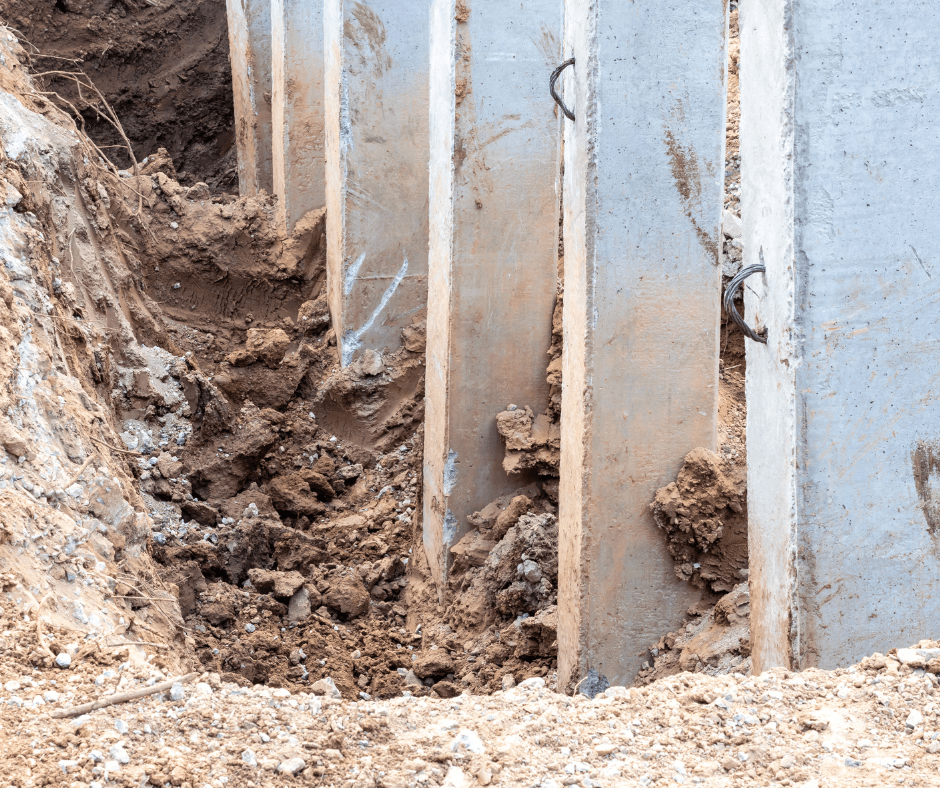
Before a single foundation is poured, site managers have a responsibility to consider the long-term environmental impact of their project. This is especially critical on brownfield sites, industrial lots, or any area with potential ground contaminants. Unstable or highly permeable soil acts like a sponge, allowing any existing chemicals to migrate into groundwater or letting new surface spills—oils, fuels, industrial chemicals—seep deep into the earth.
Traditional methods offer little protection. A layer of gravel is porous by nature, and while compacted soil can slow down water, it does little to stop chemical leaching over time.
This is where soil stabilization offers its first decisive victory. The process of applying a co-polymer resin, like the ones provided by Green Roads Project, does more than just add strength; it fundamentally changes the soil’s relationship with water and other liquids.
The polymer works by binding the fine particles of the native soil into a single, tightly-bonded, cohesive mass. This process dramatically reduces the soil's permeability, creating a semi-impermeable or fully impermeable cap just below the surface.
This engineered shield provides two distinct benefits:
It Locks Contaminants In: On sites with pre-existing ground pollution, a stabilized layer acts as an engineered barrier, effectively encapsulating the contaminants and preventing them from leaching further down into the water table
It Keeps New Spills Out: For industrial applications like equipment pads or storage yards, the stabilized surface acts as a built-in containment liner. Any surface spills are held on top, where they can be cleaned up efficiently instead of becoming a permanent environmental liability.
This creates a safer, more responsible site, mitigating long-term risk and ensuring compliance with environmental regulations from day one.
Win #2: Stronger Foundations with a Smaller Concrete Bill
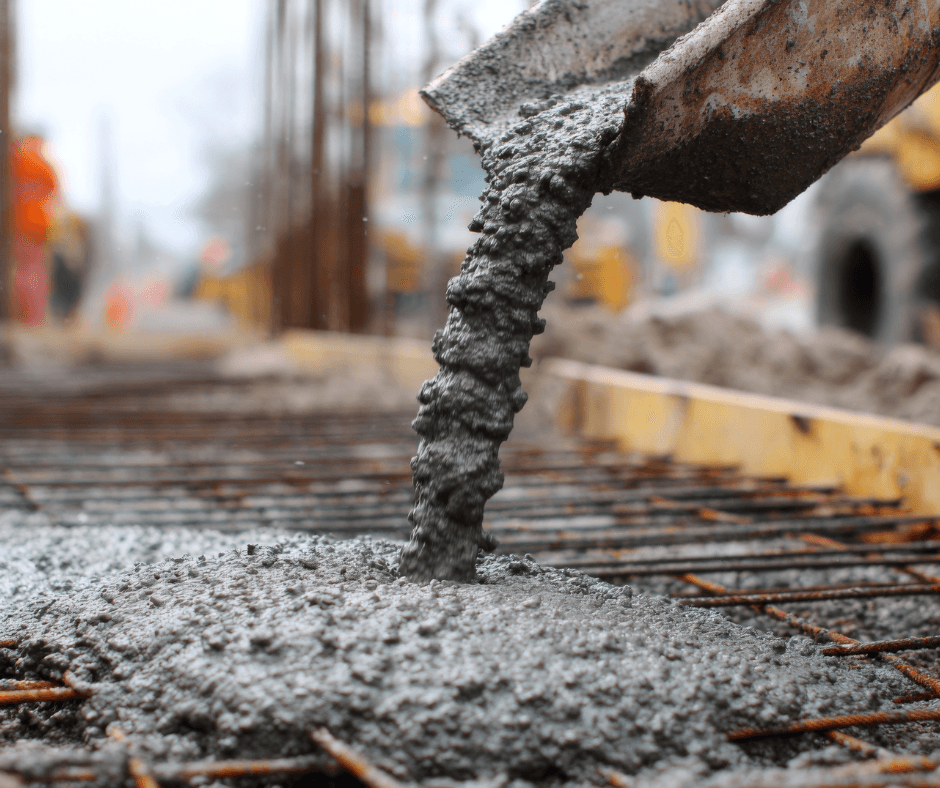
The single largest cost in many vertical construction projects is concrete. For engineers, the central question is always, "How thick does the foundation or slab need to be?" The answer depends almost entirely on the strength of the ground underneath it, known as the subgrade. A weak, unstable subgrade requires a much thicker, more heavily reinforced concrete slab to prevent cracking and structural failure.
This is where the "remove and replace" method has dominated. By trucking in expensive, load-bearing aggregate, engineers can create a stronger base. But soil stabilization achieves superior results at a fraction of the cost and complexity.
By binding the native soil, the stabilization process dramatically increases its load-bearing capacity and structural integrity, measured by metrics like the California Bearing Ratio (CBR). Instead of a loose, unpredictable base, you have a solid, uniform, and reliable platform for your build.
This enhanced subgrade leads to a cascade of benefits, chief among them being a radical change in the concrete equation:
Thinner Concrete Slabs:
With a stronger, more resilient foundation beneath it, the concrete slab on top doesn't have to work as hard. Engineers can confidently design a thinner slab to achieve the exact same structural performance, directly reducing the total volume of concrete required for the project.
Significant Material Savings:
Less concrete means immediate and substantial cost savings. When dealing with tens of thousands of square feet, even a one- or two-inch reduction in slab thickness can translate into hundreds of thousands of dollars saved on concrete and rebar.
Faster Project Timelines:
Thinner slabs mean faster pours and quicker curing times, allowing subsequent phases of construction to begin sooner and accelerating the entire project schedule.
By strengthening the ground first, you are not just preparing the site; you are actively engineering a more efficient and cost-effective structure.
Win #3: A Measurable Reduction in Your Project's Carbon Footprint
In today's world, the most successful projects are not just measured by their budget and timeline, but also by their environmental impact. Sustainability is no longer a buzzword; it’s a critical performance indicator. This is where soil stabilization delivers its most compelling and future-focused win, by drastically lowering a project’s carbon footprint in three key ways.
The Concrete Factor:
The production of concrete is one of the world's largest sources of CO2, accounting for roughly 8% of global emissions. By enabling thinner foundation designs, soil stabilization directly reduces the total amount of concrete and cement needed, delivering a clear and quantifiable reduction in embodied carbon.
The Diesel Factor:
The "remove and replace" method is incredibly carbon-intensive. It requires a constant parade of heavy-duty diesel trucks to haul away tons of old soil and haul in tons of new aggregate. By using the in-situ (native) soil already on site, soil stabilization eliminates the vast majority of this trucking. This means fewer vehicle miles, a massive reduction in diesel fuel consumption, and less noise and air pollution for the surrounding community.
The Material Factor:
Using on-site soil is inherently more sustainable than extracting, processing, and transporting virgin materials from a distant quarry. It’s a core principle of green building: working with what you have to reduce waste and conserve natural resources.
When you combine these three factors, the sustainability payoff is undeniable. Soil stabilization isn't just an "eco-friendly" choice; it's one of the most impactful decisions you can make to build a genuinely sustainable and responsible project.
The Smartest Investment is the Ground
You Build On
The success of any build is determined long before the first wall goes up. It's determined by the quality of its foundation. By shifting the approach from fighting the ground to empowering it, soil stabilization offers a clear path to a better build.
It delivers environmental protection by creating a shield against leaching. It boosts performance by creating a stronger subgrade that allows for more efficient foundation design. And it protects the planet by dramatically cutting the carbon footprint of your site work.
Taking control of the ground is your project's first win—a strategic decision that pays dividends in cost, time, and sustainability from day one to completion.