Wind, Rain, and Ruts: Building Resilient Infrastructure for the Renewable Energy Boom
The dawn of the renewable energy boom has painted our landscapes with a new kind of infrastructure. Massive wind turbines spin on remote ridgelines, and sprawling solar farms turn desert valleys into seas of glass. These are monuments of modern engineering, built to operate for 25 to 30 years, often in the harshest, most exposed environments on Earth. But their success hinges not just on the turbines or panels, but on an often-overlooked network of humble access roads, service pads, and foundations.
These projects have taught their builders a hard, multi-million dollar lesson: when your asset's lifespan is 30 years, building a "good enough for now" road is a catastrophic financial error. The true enemy of a long-term project isn't a single catastrophic event; it's the slow, relentless grind of wind, rain, and ruts.
This high-stakes industry has been forced to innovate, mastering the science of long-term, low-maintenance, resilient design. Yet, they’re still learning that the only way to build a profitable, 25-year asset is to eliminate the endless, budget-draining cycle of repair.
This lesson provides a powerful, proven blueprint for all forms of development. For city and county governments, real estate developers, and RV park builders, the challenge is identical. How do you build infrastructure that not only survives its first year but thrives in its 25th - all without becoming a black hole for your maintenance budget? The answer lies in re-evaluating the ground itself, not as a problem to be covered up, but as an asset to be permanently transformed.
The Old Model:
A Financial Trap Disguised as a Road
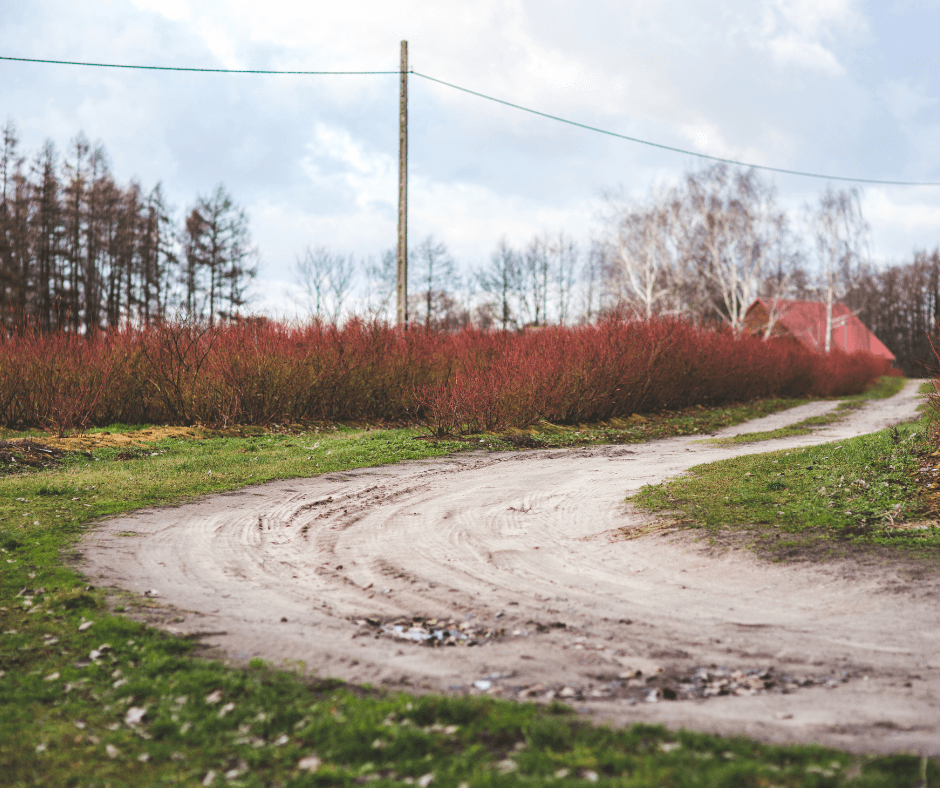
For decades, the standard approach to building unpaved and light-duty roads has been the same for a suburban developer as for a county public works department. You lay down a base of compacted aggregate or decomposed granite, or perhaps a thin, "chip-seal" layer of asphalt. This is a "Day One" design—it looks perfect for the ribbon-cutting ceremony.
But what happens on Day Two?
Rain falls. Because the base is permeable, water soaks into the subgrade, saturating the soil and destroying its load-bearing capacity. The road turns to mud, ruts form, and potholes bloom.
Wind blows. In the dry season, the fine particles in the roadbed become airborne, creating clouds of fugitive dust that violate air quality, anger residents, and create a health hazard.
Ruts appear. Daily traffic, whether it’s a school bus on a rural road or an RV in a campground, slowly displaces the loose gravel, leading to washboarding and deep, dangerous ruts.
The result is a road that is in a constant state of managed failure. The "solution" becomes a line item in the operational budget (OpEx) that never goes away: the grader, the water truck, the patch crew, and the "re-graveling" project every few years.
This is the maintenance trap.
The New Financial Metric: Life Cycle Cost Analysis (LCCA)
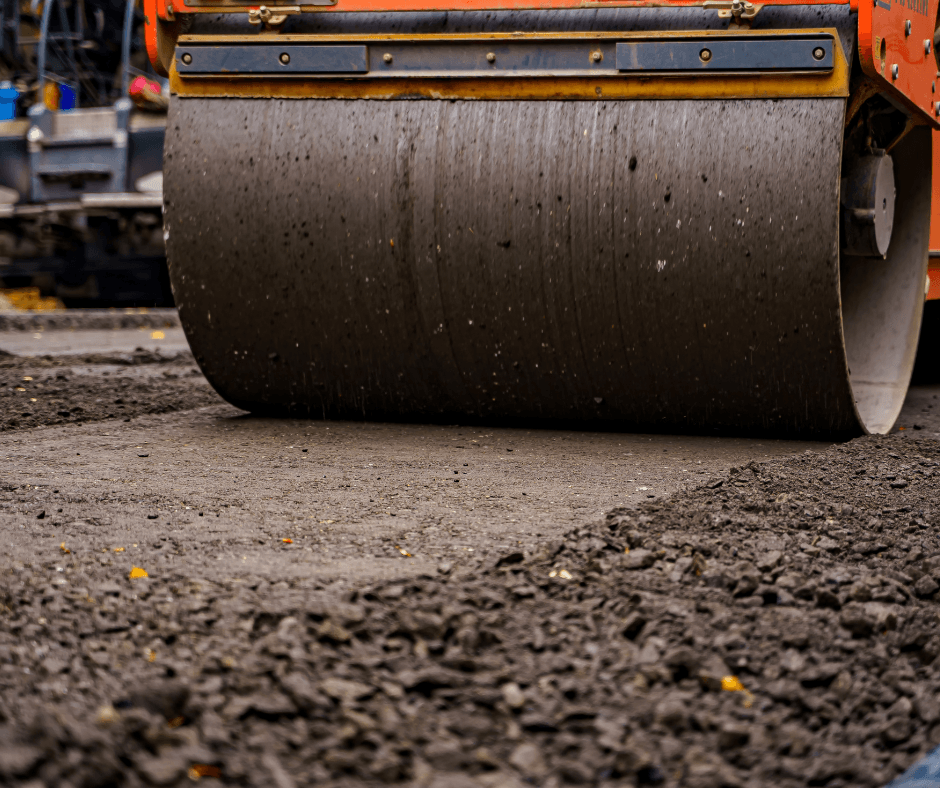
The renewable energy sector shattered this old model because their financial projections depend on predictable, long-term operational costs. They don't just ask, "What does it cost to build?" They ask, "What is the Total Cost of Ownership (TCO) over 25 years?"
This calculation, known as a Life Cycle Cost Analysis (LCCA), changes everything.
Traditional Road LCCA:
Initial Capital Expense (CapEx): Low
Long-Term Operational Expense (OpEx): Astronomically High
Total Cost of Ownership: Very High
Stabilized Soil Road LCCA:
Initial Capital Expense (CapEx): Medium (higher than loose gravel, but 6-8 times lower than concrete)
Long-Term Operational Expense (OpEx): Near-Zero
Total Cost of Ownership: Dramatically Low
This is the paradigm shift. Soil stabilization—the process of engineering the native soil with a polymer binder to create a strong, water-resistant, unified slab—is a one-time capital investment that virtually eliminates the long-term operational expense.
For your target audiences, this financial pivot is a game-changer:
For City and County Governments:
This is the key to unlocking your budget. Imagine redirecting your entire annual road grading and re-graveling budget to new community projects, all because your existing roads no longer require that constant, costly attention. You are not just fixing a road; you are fixing your budget.
For Real Estate Developers:
The long-term cost of road maintenance is a primary driver of high HOA fees. By building stabilized roads, you hand over a low-maintenance asset to the community. You can now market a lower, more predictable HOA fee—a powerful and tangible selling point that speaks directly to a new homebuyer's total cost of ownership.
For RV Parks & Campsite Builders:
Your road network is a primary asset that directly impacts the guest experience. Instead of an ongoing cost center, a stabilized road system becomes a one-time, depreciable asset on your books, all while eliminating the top complaints of mud, dust, and ruts.
Escaping the "Cap Material" Trap: A Smarter Capital Expenditure
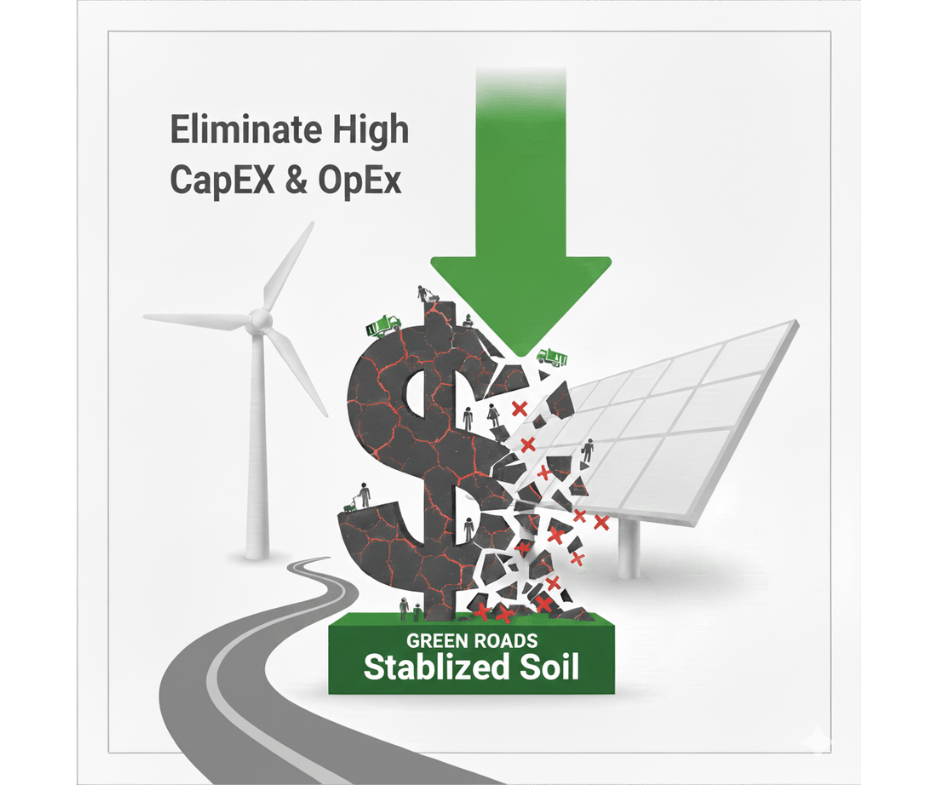
This brings us to the next "new" idea: a fundamental misunderstanding of what soil stabilization is for. Many assume it's just a better way to prepare the sub-base before spending a fortune on an asphalt or concrete cap. This is incorrect.
.
For the vast majority of access roads, parking lots, trails, and driveways, the stabilized soil is the finished surface.
This allows you to escape the "Cap Material Trap." This is the expensive, failed cycle where a failing gravel road is "fixed" by adding a thin, 2-inch layer of asphalt on top. This is a massive new capital expense. But because the sub-base is still weak, permeable, and saturated with water, that water pushes up, freezes, and thaws, and the new asphalt develops "alligator cracking" and fails from below within a few years. You have spent a fortune, yet solved nothing.
Soil stabilization replaces the need for that asphalt cap entirely.
The stabilized soil itself, using the dirt already on your site, is engineered to have the strength, durability, and all-weather performance to be the road.
This is a double financial win. You are not only eliminating the long-term OpEx of maintenance, but you are also eliminating the massive CapEx of purchasing and installing tons of asphalt or concrete. You are building a 25-year, high-performance road for a fraction of the cost of traditional pavement, all while achieving the "natural look" that developers and park builders crave.
Engineering True Resilience: A Road for All Seasons
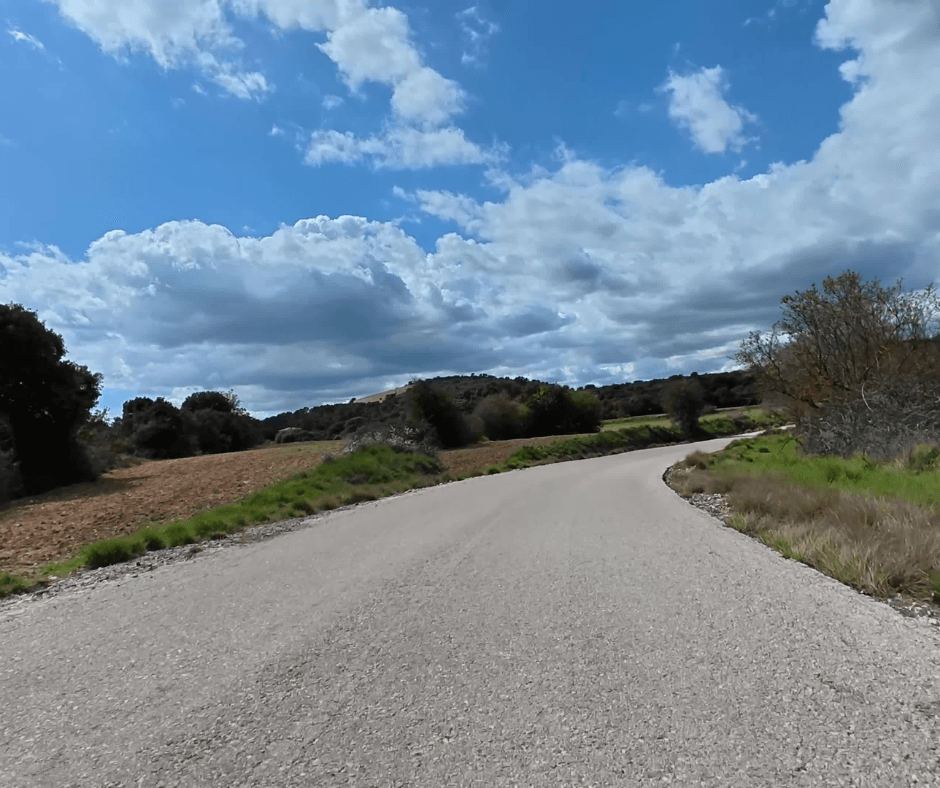
Finally, let's talk about resilience. A resilient asset is one whose performance is not dependent on the weather. A traditional road is the opposite: its performance is entirely hostage to the weather.
Soil stabilization engineers resilience directly into the ground.
Defeating the Rain and Ruts
The polymer binder creates a highly impermeable surface. When it rains, water does not soak into the sub-base. It sheets off the crowned surface, just as it does on pavement. Because the sub-base stays dry, it retains 100% of its structural strength. It cannot turn to mud. It cannot form deep ruts. This is the key to all-weather access, a non-negotiable for a solar farm and a massive value-add for a campground or new community.
Defeating the Wind
By binding the fine particles (the "fines") into the road's structure, you are eliminating the source of fugitive dust. The wind can blow, but the road stays put. This solves air quality compliance issues for construction sites and mining operations, and it solves the number one "cleanliness" complaint for RV parks and real estate developments.
The result is a road that performs the same in a January downpour as it does on a dry August afternoon. This is the resilience that the renewable energy boom demands, and it's the same resilience that will protect the long-term value of your community, park, or development.
The Blueprint for the Future
The renewable energy industry is proving a simple thesis: building cheap is expensive. The true path to profitability and sustainability is to invest in resilient, low-maintenance, long-life assets.
This is the blueprint for all modern development. Whether you are a public works director tired of the maintenance trap, a developer looking for a competitive edge, or an RV park owner who wants to deliver a premium experience, the goal is the same. Stop building for "Day One." Start building for "Year 25."
By embracing soil stabilization, you are not just building a road. You are building a financially sound, operationally superior, and truly resilient piece of infrastructure that defeats the wind, rain, and ruts for good.